
“I don’t believe in fate, but meeting Visual Armenia in 2024 completely changed the way I work, the way I think, and the way I see education.” Beekeeper. Teacher. Mentor. For Sasun Vardanyan, these roles are not contradictory—they are chapters of the same journey. Although trained as an educator, it was only after the 2020 war that he made the life-changing decision to dedicate himself fully to teaching. Today, he teaches History at Sisian Basic School No. 4 and Vorotan Basic School in Armenia’s Syunik Province, driven by a clear conviction: “Schools need more male teachers. Their role goes far beyond delivering knowledge—they help shape character, values, and responsible citizens.” When he first entered the classroom, Vardanyan set himself three guiding goals: to cultivate tolerance among young people, help students understand their own history, and encourage them to think independently. “A small conflict in a classroom can eventually become a much larger problem. Young people need to learn to listen, to respect one another, and to forgive. That is not only a school issue—it’s a challenge for society as a whole. And in today’s digital world, where misinformation spreads so easily, especially among young people, independent thinking has become more important than ever.” This year, Vardanyan became one of only two teachers from Syunik Province to successfully complete the 2025-2026 WorldView Mentorship Scholarship Program. Although he has been teaching for just two years, he says he can no longer imagine his classroom without the WorldView educational platform or the professional development opportunities offered by the Visual Armenia Foundation. “I don’t believe in fate, but meeting Visual Armenia in 2024 transformed everything for me,” he recalls. “I had only recently started teaching. Every day brought new challenges, and often I simply didn’t know where to find solutions. Even a brief conversation with the Visual Armenia team would provide answers. I’ve often thought they’re a remarkable group of people—you discover that the ideas you’ve been quietly carrying in your mind are already being brought to life by them.” For Vardanyan, WorldView has become much more than a teaching tool. It has transformed the atmosphere of his classroom and reignited students’ curiosity. “When I first started teaching, very few students were interested in History. Today, that’s completely different. This year I have students preparing for the National Olympiad—students who never imagined they were capable of reaching that level. Now, whenever they hear we’re using WorldView, they’re eager to participate. They can’t wait to get involved. Seeing that excitement is incredibly rewarding.” He rarely misses a WorldView training session, believing that every new program brings fresh perspectives and opportunities for growth. “If a teacher truly wants to grow professionally, continue learning, and keep pace with today’s rapidly changing world, I believe the WorldView platform and its training programs are among the best opportunities available. The mentorship program felt like the culmination of everything I had learned through WorldView, bringing it all together into a coherent whole. It has inspired me to set new goals, and I’m genuinely looking forward to the new academic year.” As part of the mentorship program, Vardanyan has already begun training fellow educators—but he sees this as only the beginning. He hopes to share what he has learned with many more colleagues and inspire them with the same enthusiasm that transformed his own teaching. Only four teachers currently use WorldView in his school. He believes that number should grow significantly. “Teachers often tell me that only one or two students actively participate during lessons. I don’t experience that with WorldView. There’s meaningful work for every student, including those who usually struggle. I invite colleagues to observe my classes, compare different teaching approaches, and decide for themselves which creates a more engaging learning experience. WorldView offers rich content and countless possibilities for building truly comprehensive lessons.” Vardanyan and his students also earned a Smart Board through the “Smart Boards for WorldView Schools” competition. For him, however, the greatest value lies not in receiving the technology itself, but in the process of earning it. “When students work together toward a goal and achieve it through their own efforts, they understand its true value.” Looking back on his first two years as a teacher, he considers his relationship with his students to be his greatest achievement. “Many children simply aren’t given enough opportunities to talk about even the most ordinary things. Yet every child has a fundamental need to be heard and understood. Sometimes all it takes is a little trust—a small responsibility, a simple opportunity—and that can lead to remarkable changes.” Vardanyan believes the knowledge and skills he gained through the WorldView Mentorship Program will help him continue creating those changes—raising not only successful students, but thoughtful, responsible citizens who know their history, think independently, and have the confidence to speak with their own voice.

What should education look like if every child is to do more than simply be present in the classroom—to participate, express themselves, grow, and feel like a valued part of the learning process?

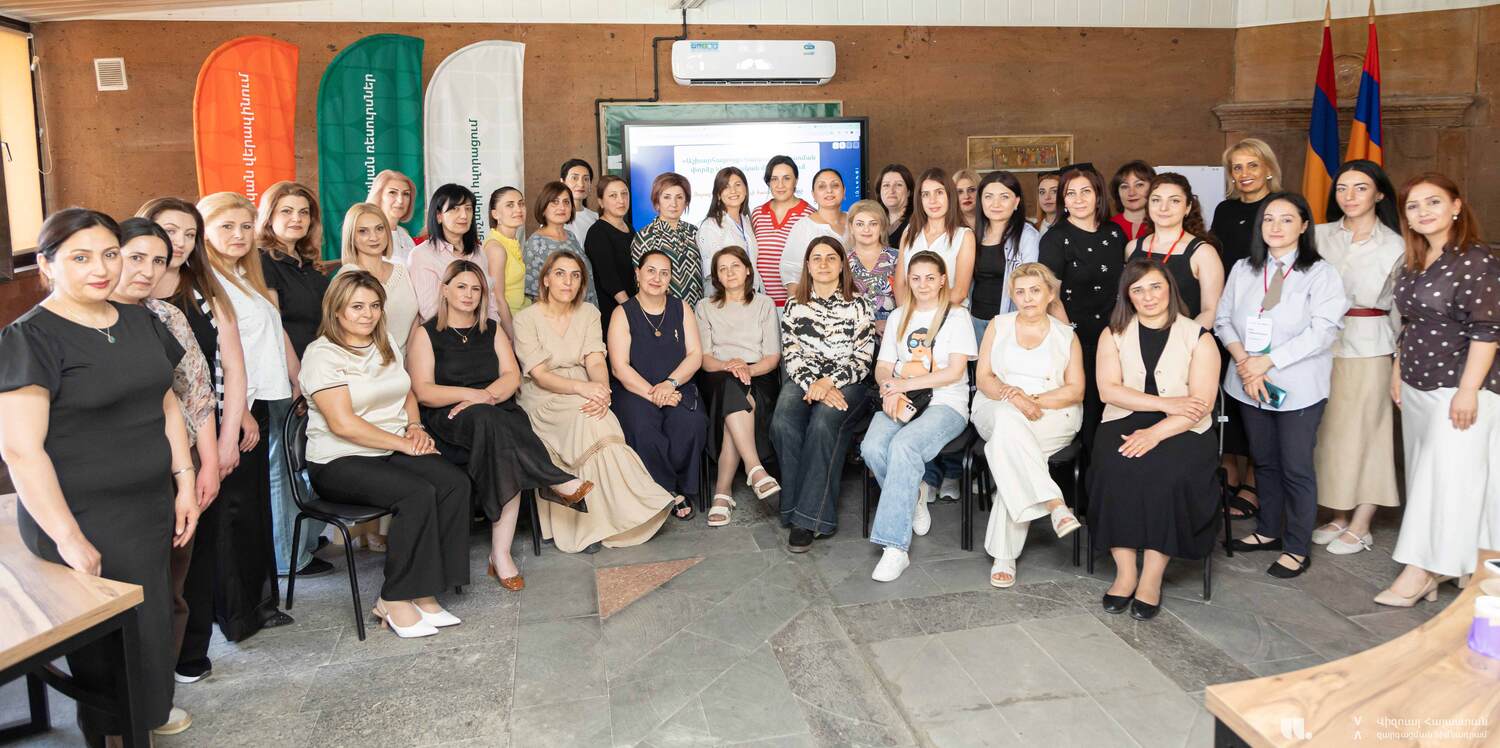
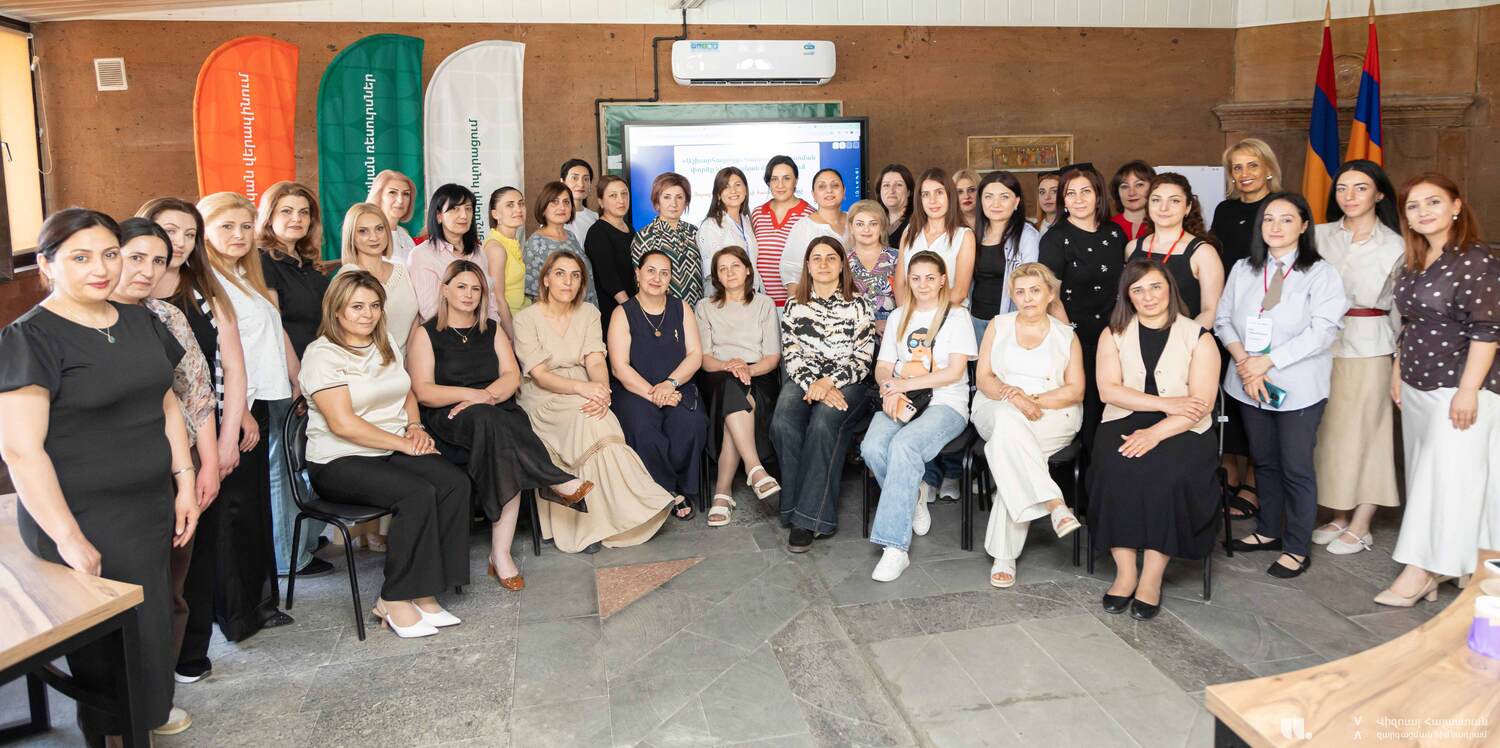
This question was at the heart of a professional panel hosted by the Visual Armenia Foundation on June 10, titled “WorldView as a Tool for Promoting Universal Inclusivity.” The event brought together approximately 50 teachers, parents, educational psychologists, and special education professionals from across Armenia.

The diversity of the participants was intentional. Inclusive education cannot be built through the efforts of teachers, parents, or specialists alone. Each stakeholder sees a different facet of a child’s experience, and only by uniting these perspectives can we design environments where every learner can participate fully in the educational process.

One of the primary goals of the meeting was to explore how WorldView can contribute to advancing universal inclusion, which stands as a critical benchmark for educational quality.

The guest speaker, inclusive education specialist, educational psychologist, and school program coordinator Lilit Seyranyan, shared pedagogical observations and real-life stories that grounded the theory into practice. One of the key insights from the discussion was simple yet powerful: “The child should not have to adapt to the environment. The environment must be designed to suit the child.”

Through this lens, participants explored WorldView as an environment that opens new avenues for learning, communication, discovery, and active participation.

The discussion repeatedly highlighted that children perceive and understand the world in different ways. For some, visual elements—such as maps, icons, photographs, and multimedia resources—are essential. For others, engagement begins with direct interaction: the opportunity to examine, compare, and discover independently.

Participants noted that these diverse entry points are precisely what make WorldView so engaging for learners with varied educational needs. Interactive maps, the digital globe, measurement tools, rich visual content, and adjustable text sizes not only make learning materials more accessible but also help sustain attention and foster active engagement.

As one participant beautifully noted: “WorldView has a unique quality: although it is a high-tech platform, it does not distance people from one another.”

One teacher spoke about David, a student who requires an individualized approach but has become deeply engaged with WorldView. During lessons, David often takes the teacher by the hand and leads them to the screen, eager to explore the maps and interactive tools. In those moments, roles often shift. Seeing David’s enthusiasm, the other children gather around, ask questions, and join the discussion. David transitions from being a recipient of support to the initiator of engagement.

Alice’s story is different. She loves to draw. For her teacher, a new feature allowing users to draw and annotate directly on media files sparked an idea: transforming Alice’s favorite pastime into a pathway for learning. “Starting in September, I am definitely going to try this format to engage her more actively in class,” the teacher shared.

Other stories demonstrated how children can reveal their strengths in unexpected ways. A teacher from Vanadzor spoke about a student with a passion for technology. While working with WorldView, he quickly became one of the most active participants in the classroom. Gradually, the rest of the class began to follow his lead.

Educational psychologist Arpine Ayvazyan enriched the dialogue by bringing in the vital perspective of a parent, reminding everyone that inclusion is first and foremost about attitude and belonging. “Love alone is not enough. Inclusion is about seeing each child’s strengths and helping them blossom. My child should also feel like a full participant in the process—have friends, overcome challenges, and feel like they belong.”

At the conclusion of the meeting, the Visual Armenia team facilitated a collaborative SWOT analysis to map out the next steps needed to align WorldView even more closely with the principles of universal inclusion.

For WorldView, this was not the conclusion of a discussion, but the launch of a new phase of development. Universal inclusion is not a final destination to be reached; it is an ongoing process through which the educational environment continuously adapts to the learner, learns from them, and evolves alongside them.

The more diverse our children are, the more flexible education must become.

Technology realizes its true value not when it separates, but when it grants every child the opportunity to participate, discover, learn, and feel that they matter.

Because every child deserves a world accessible to them.

This site is registered on wpml.org as a development site. Switch to a production site key to remove this banner.